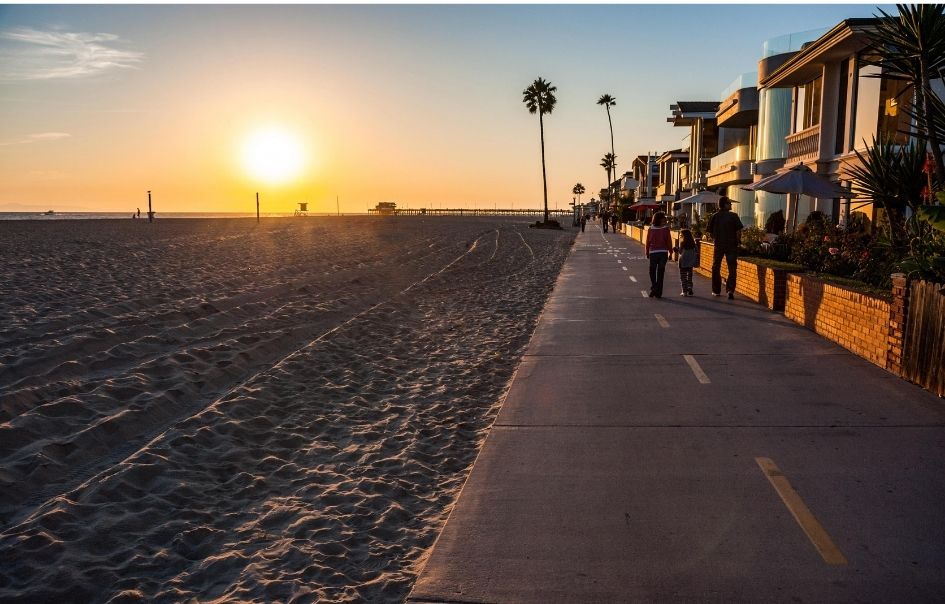
Four kids. Two weeks. Zero car rides. Big waves, tiny playgrounds, old-school Newport history, and one lifeguard interaction I don't think I'll ever forget.
There might be prettier beaches in Southern California.
There might be quieter beaches. Beaches with gentler waves. Beaches with dramatic cliffs, secluded coves, better parking, fewer people, more people, fancier restaurants, cheaper restaurants.
So why Newport?
I've been coming to Newport Beach nearly every summer since I was nine years old. I came here as a kid, then as a teenager, then with friends, then with Jeff, and now with our own four kids.
So Newport isn't new to me.
But spending two weeks on the Balboa Peninsula with four children somehow made me understand what I have loved about it all these years.
Because in Newport, you don't just go to the beach. For a little while, you get to live at the beach.
And those are two very different things.
For two weeks, we barely touched our car.
Actually, I don't think we touched it at all.
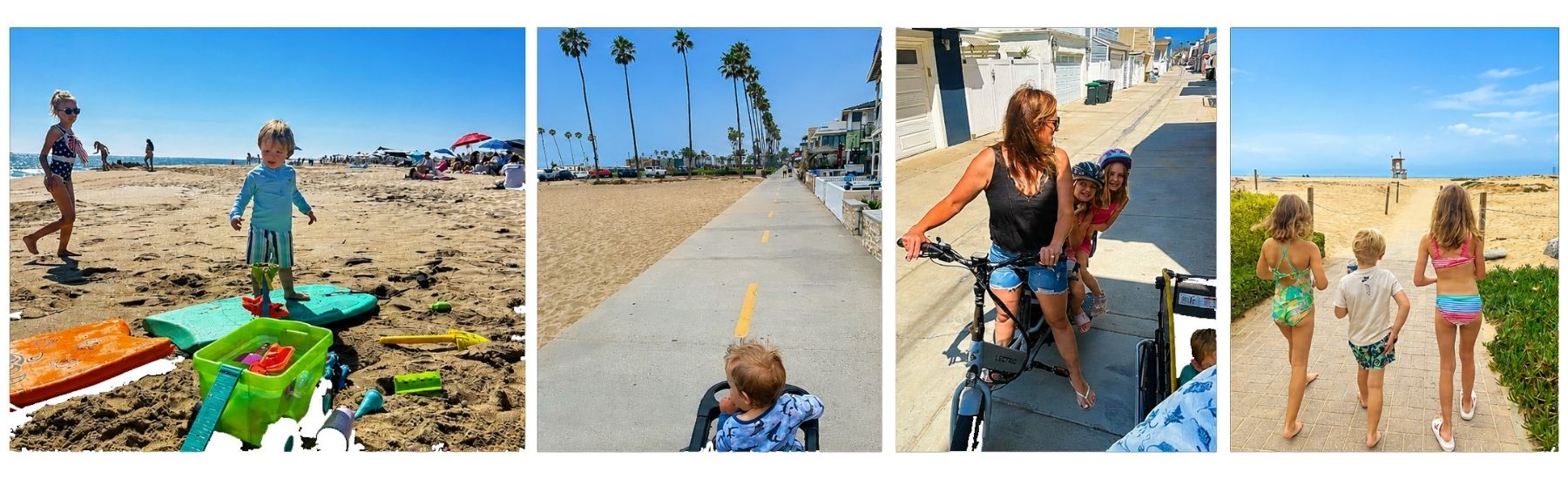
The kids walked or rode scooters. We rode bikes. We could get breakfast, go out to dinner, buy groceries, walk to playgrounds, wander down to the Fun Zone, play arcade games, ride the Ferris wheel, get on a boat, go fishing, cross the harbor, or simply drag ourselves back to the sand.
If we needed groceries, they were a bike ride away. If we were feeling exceptionally lazy — which four kids and a full day in the ocean will occasionally do to a person — we Insta-carted them.
There is something wonderfully liberating about realizing that nobody needs to be buckled into anything.
No loading the car. No unloading the car. And very little concern about shoes.
I'm personally a big fan of no shoes while we're there. The beach was literally across the street from us, and I've never understood putting on flip-flops solely for the purpose of walking through sand so you can arrive at...more sand.
Eventually someone does need shoes, of course.
But at least you're not standing beside a minivan barking, “WHERE ARE YOUR SHOES?” while everyone slowly loses the will to live.
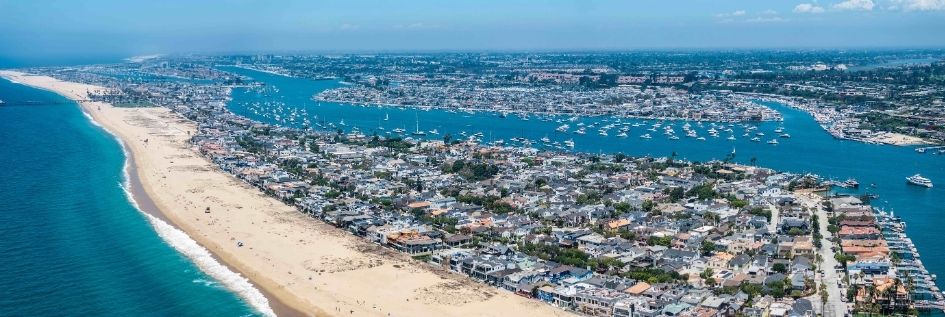
The geography is a huge part of it. The Balboa Peninsula is basically a long, skinny strip of land with Newport Harbor on one side and the Pacific on the other. The Fun Zone has been part of it since 1936, but people were coming out here for boating and beach recreation long before that.
An incredible amount of life gets compressed into a very small radius.
And when you have four kids ages two through eleven — one sparkly girl drawn magnetically toward anything involving mermaids while the boys are happily using their own heads to plow trenches through the sand — a small radius is luxury.
Newport Is Not the Beach I Would Choose Because the Ocean Is Gentle
Let's establish something.
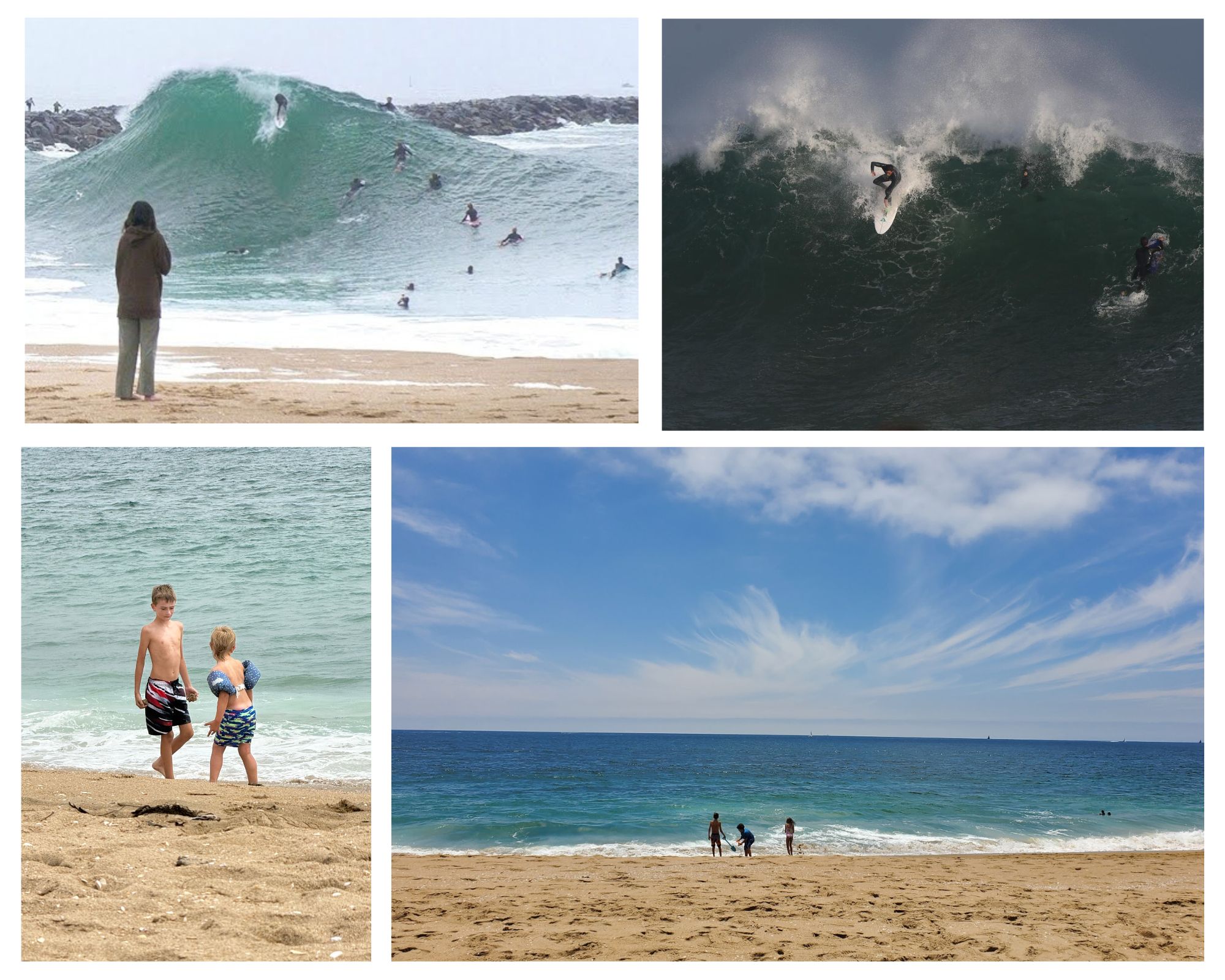
The waves were big.
Our youngest children did not care.
This was deeply upsetting to our eleven-year-old, Jameson, who came into this world apparently believing it was his responsibility to keep the rest of us alive.
This is a child who, if I'm five minutes late picking him up from school, is prepared to ask his teacher whether she thinks I may have died.
So picture him watching his younger siblings approach a powerful Pacific Ocean with approximately the same level of caution they would use approaching a splash pad.
They thought getting knocked over was hilarious. They thought getting dragged through the sand was hilarious. They thought waves rushing at their faces were hilarious.
Their mother — me — was attempting to walk that impossible parenting line between protecting them and allowing them to actually experience the ocean.
I want my kids to feel its power. I want them to get knocked down occasionally. I want them to learn that the water is stronger than they are, that you pay attention to it, that you don't turn your back on it, and that just because something is beautiful doesn't mean you get to be careless around it.
Apparently the lesson the little ones were receiving was:
THIS IS AMAZING. DO IT AGAIN.
Jameson was a nervous wreck.
Which is one reason we intentionally planted ourselves directly in front of a lifeguard tower.
Then the Ocean Proved Jameson Right
At one point, I had our two-year-old's leg in my hand when a large wave came through and knocked him down. At basically the same moment, the water picked up four-year-old Emerson and started pulling him a foot or two with it.
I saw it happen. Jameson saw it happen.
And Jameson moved.
There was no hesitation. He launched himself on top of Emerson and grabbed his legs to keep him from being pulled any farther.
Everyone was fine, but the young lifeguard sitting above us had seen the entire thing. And then he did something I wasn't expecting.
He climbed down from his tower.
Not because there was an emergency. He came down specifically to talk to Jameson.
He told him what a fast mover he was, how alert he had been, and how caring he must be as a big brother. Then he told him they needed more lifeguards just like him.
I watched my anxious child's chest practically inflate.
And I will probably love that lifeguard forever for it.
What I didn't realize yet was that this wouldn't be our only interaction with the lifeguards. Jameson continued to worry afterward, which, considering what he had just watched happen, wasn't exactly surprising.
He had seen the ocean briefly pick up his four-year-old brother while his two-year-old brother seemed to regard being repeatedly knocked flat by giant waves as one of the greatest recreational opportunities of his young life.
So the questions kept coming.
Are you sure they're okay there? What if another wave does that? What am I supposed to do if Emerson gets pulled again? Are you sure?
Eventually, instead of answering his approximately four hundredth ocean-related hypothetical myself, I started pointing toward the tower.
Go ask the lifeguard.
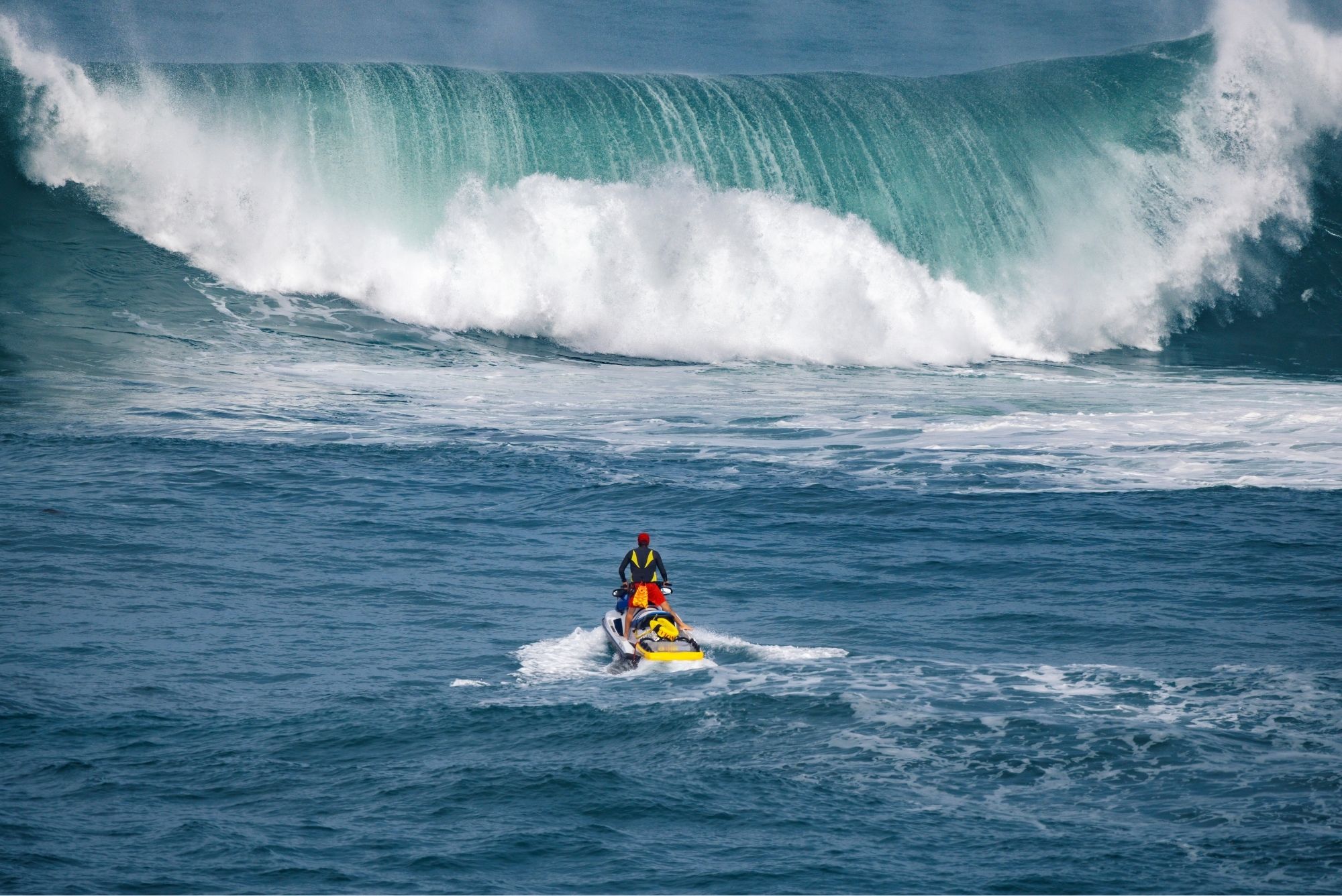
If he had a concern about the waves, I wanted him to take it to the person sitting ten feet away whose actual job was understanding those waves.
And every single time, they took him seriously.
Nobody brushed him off or gave him a distracted you're fine, kid before sending him away. They would take the time to come down, kneel so they were talking to him face-to-face, listen to whatever he was worried about, and calmly explain what he should watch for and what he should do if it happened.
That impressed me almost as much as the lifeguard who had come down to compliment him in the first place.
Because Jameson didn't need another adult telling him there was nothing to worry about.
He needed someone who knew the ocean to tell him what to know.
His eyes had been working perfectly well. There were big waves. There were little siblings behaving as though being knocked halfway back to shore were a hilarious recreational activity.
The lifeguards never needed to pretend otherwise. Instead, they took the part of Jameson that is always scanning for danger and showed him another way to understand it.
Not:
You're scared.
But:
You're aware.
Not:
Stop worrying.
But:
You noticed. You reacted. You protected someone.
That distinction meant everything.
And the lifeguard thing matters to me for another reason. Water safety isn't some obscure parental fear I'm inventing while sitting under an umbrella.
According to the CDC, more American children ages one through four die from drowning than from any other cause. Among kids ages five through fourteen, drowning is the second-leading cause of unintentional injury death. Boys also have higher drowning death rates than girls throughout most of childhood and adolescence.
And after watching both of my younger boys get absolutely walloped by giant waves, scramble back to their feet laughing, and immediately charge back in for another round, I no longer find the boys part of that statistic particularly mysterious.
I don't carry those statistics around because I want my kids to be afraid of water.
Quite the opposite.
I want them to become competent around it.
I want them to know the difference between fear and respect.
And that's probably why I notice the lifeguards here.
Newport's Lifeguard Operations Division covers more than six miles of ocean beach along with its bay beaches and is recognized by the United States Lifesaving Association as an Advanced Agency.
Their presence feels substantial.
But after this trip, it feels like more than coverage.
It feels like a culture.
One where kids aren't expected to pretend the ocean isn't dangerous. They're taught to understand it.
And after watching those lifeguards patiently turn my son's fear into information — and one young lifeguard turn his anxiety into pride — that feels personal now too.
And Suddenly the Junior Lifeguards Made More Sense
I've been coming to Newport since I was nine, and every summer I notice them.
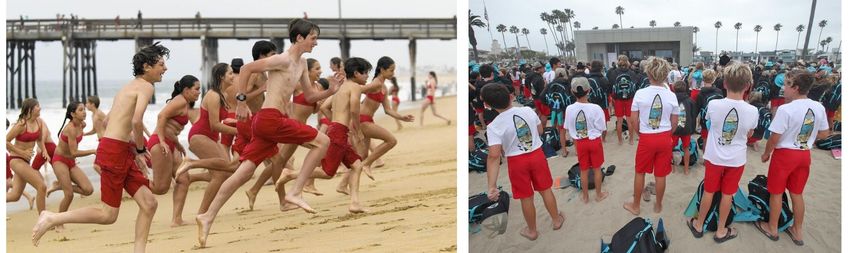
They seem to speckle the shoreline in red — running down the sand, swimming, training, moving in packs along the beach.
And I've always had the impression that this isn't one of those programs where everyone puts on a matching shirt, plays some games and gets congratulated for participating.
These kids look like they're working.
So after this trip, I finally looked it up.
Turns out, they are.
Newport Beach's Junior Lifeguard program is a seven-week ocean-based program for kids ages nine through fifteen. They learn to enter and exit the water safely, negotiate surf and shore break, complete long-distance ocean swims, paddle, bodysurf, run, identify and escape rip currents, practice first aid and learn lifeguarding skills.
Even getting in requires passing an annual swim test. Participants have to complete a timed 100-yard swim and then immediately tread water unassisted for three minutes.
Their own program materials are very matter-of-fact about something that perhaps we could stand to tell children more often:
The ocean is a hazardous environment.
I love that.
Not because I want childhood to be unnecessarily hard. But because there is a confidence that comes from being challenged appropriately.
Newport doesn't make the ocean harmless for children.
It teaches children how to become more capable around the ocean.
Watching Jameson that day, I understood exactly why that matters.
Meanwhile, Three Blocks Away, Someone Has Kindly Installed a Rock Wall for My Other Children
The beauty of staying on the peninsula is that you can have this profound parenting revelation about courage and ocean safety...
...and ten minutes later be desperately searching for somewhere your preschooler can climb before he begins scaling private property.
Fortunately, Newport has thought of this.
There are playgrounds peppered throughout the peninsula, several within easy walking distance of where we stayed. One even has a miniature climbing wall perfectly sized for toddlers experiencing an urgent need to climb, seek and destroy.
We used playgrounds constantly.
Not necessarily as destinations. More as pressure-release valves.
Scooter ride. Playground. Breakfast. Beach. Another playground. Ice cream. Look at boats. Prevent child from climbing object not legally designated for climbing. Locate object specifically designed for climbing. Continue.
That is the rhythm of traveling with little kids.
The Fun Zone Is Where My Newport and Their Newport Meet
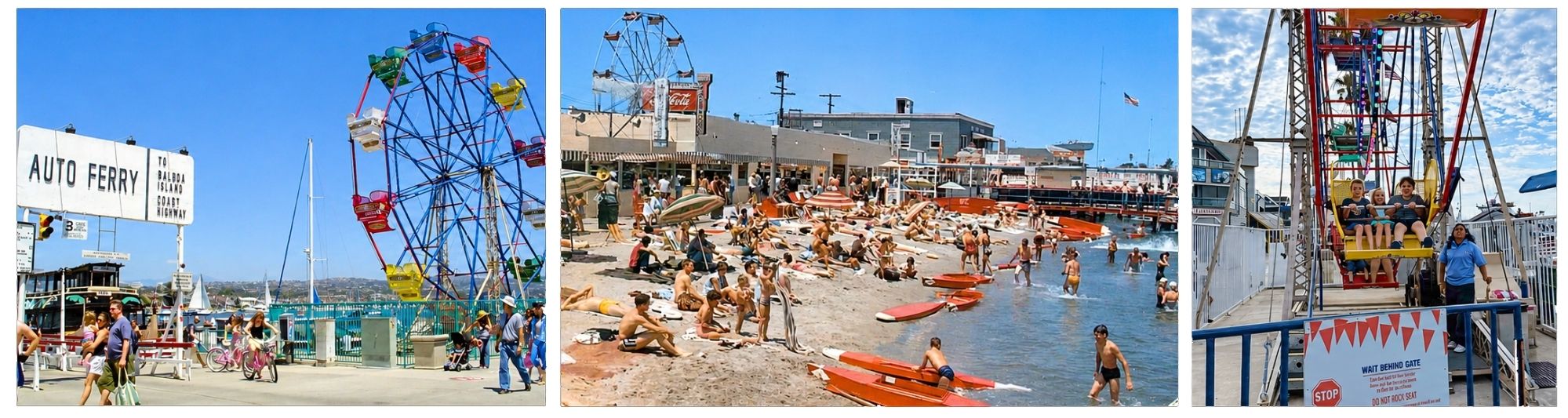
One of my favorite parts of returning to Balboa is watching the Fun Zone change.
The Balboa Fun Zone has been there since 1936, but it has been rebuilt, reimagined and rearranged repeatedly over the generations.
Which explains something I've noticed my whole life:
Everyone seems to inherit a slightly different Fun Zone.
Mine had the Scary Dark Ride.
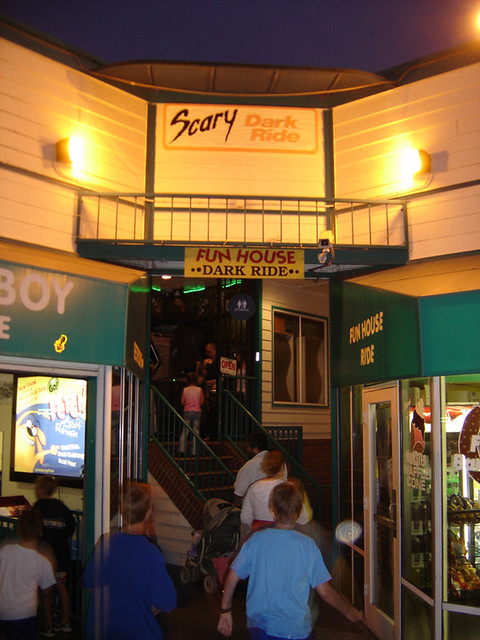
If you went to the Fun Zone in the '90s, you may remember this spectacular achievement in low-budget terror.
It wasn't scary.
That was part of its charm.
We rode it at night in junior high fully aware that almost nothing inside had the capacity to frighten us, and we loved it anyway.
Apparently our assessment wasn't unusual. Even contemporary coverage of the ride's eventual closure acknowledged that its reputation for terror may have been slightly...ambitious.
I miss it.
Today's Fun Zone is different.
There's still the Ferris wheel. There's still the arcade, which makes Jameson very happy. When we were there, a temporary-looking toddler play space had appeared, along with a mermaid dress-up setup that Everly and her friend loved.
I couldn't even tell you whether either one will still be there the next time we go.
And somehow, that feels right.
The Fun Zone doesn't stay frozen.
The kids change, and apparently the Fun Zone changes with them.
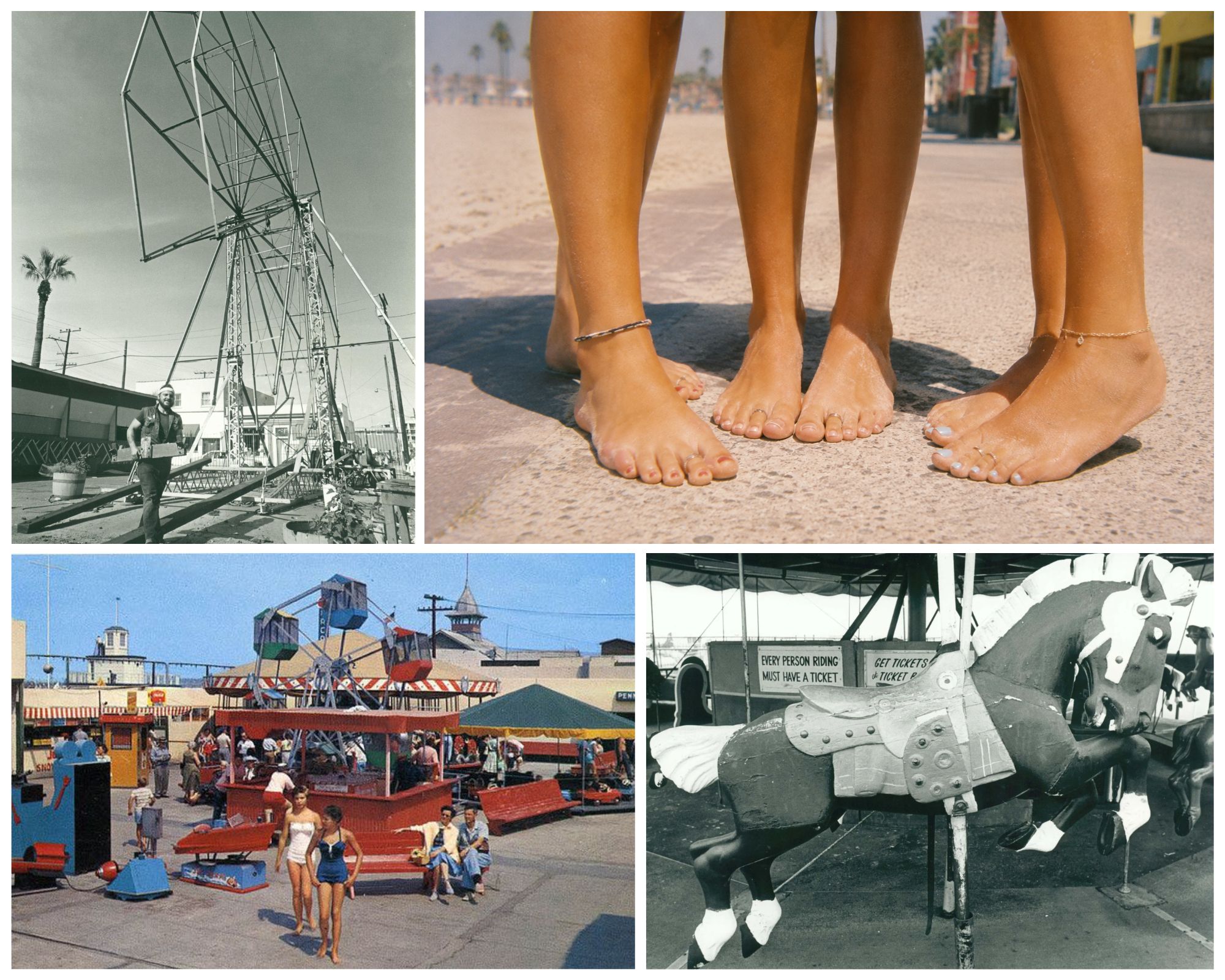
Although the Ferris wheel remains.
Which is fortunate, because nothing bonds a mother and her anxious eleven-year-old quite like sitting together high above Newport Harbor while he remains firmly convinced that if I so much as sneeze, the Ferris wheel will suddenly flip through a complete 360-degree rotation, Looney-Tunes-style.
I find this funny.
Jameson does not.
Then There Are the Little Traditions Nobody Else Could Put in a Newport Guide
There's a place called T's Toe Rings.
I have been stopping there since I was in high school in the '90s.
Back then, my girlfriends and I would go in and get matching toe rings.
There are certain purchases you make as a teenage girl that serve absolutely no practical function and yet somehow become critically important.
Matching toe rings were one of them.
So going back now — with my own daughter — is surreal in that way parenthood often is.
You aren't merely visiting a place.
You're walking through a younger version of yourself while your children run ahead of you.
That's my favorite Newport.
Not the Newport someone could recommend to me from Google.
The Newport where old versions of my life are still hiding around corners.
There Is a Lot of Old Newport Hiding Around Those Corners
This is something I didn't appreciate when I was younger.
The peninsula is old.
Not European-old.
California-beach-town old.
At Newport Pier, the Dory Fishing Fleet and its open-air fish market trace their history all the way back to 1891. It's the last remaining fleet of its type and one of those pieces of Newport that somehow still feels remarkably unmanufactured.
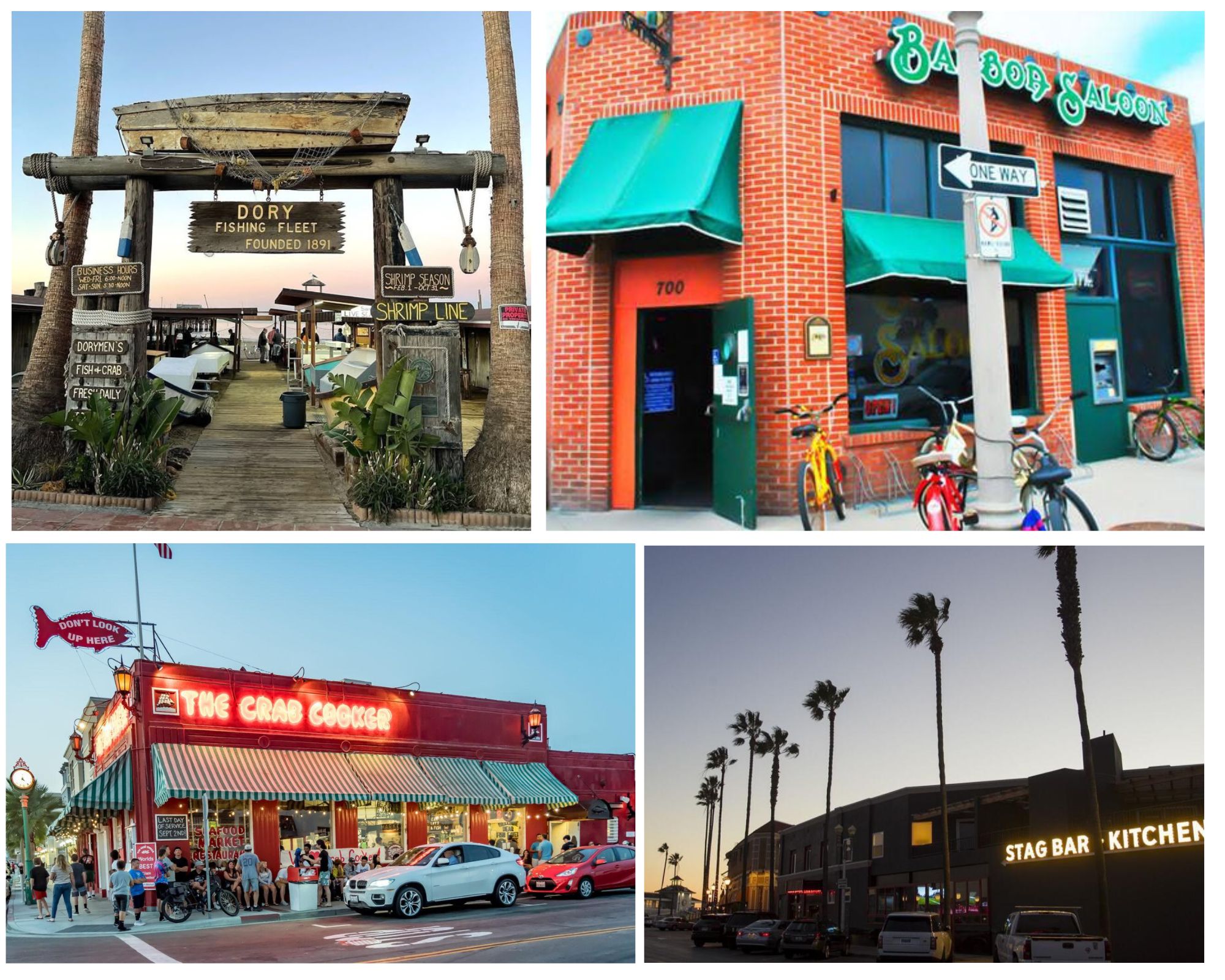
This isn't a staged “historic market” where someone sells decorative jars of jam beneath Edison bulbs.
It's a cooperative of individual commercial fishermen selling their catch.
What is available depends on the fisherman and the season, but the fleet can bring in everything from yellowtail, black cod and sand dabs to rock crab, spot prawns, sea urchin, sheepshead, octopus and seasonal spiny lobster.
You can show up in the morning and buy seafood for dinner that came out of the Pacific.
And when I say morning, I mean morning.
If you're a serious enthusiast hoping for first pick, apparently people really do begin lining up at hours normally reserved for fishermen, newborn parents and people catching international flights.
Fresh fish caught that morning?
Who can beat that for dinner?
Then there's The Crab Cooker, another one of those places that feels stitched into Newport history.
It opened in 1951, and if you've heard rumors that The Crab Cooker is closing, those were about its Tustin location. The original Newport restaurant is still going.
It's famous for the kind of food that makes sense after a day at the beach: seafood grilled over an open flame, clam chowder, smoked fish, shrimp and scallop skewers, crab and its distinctive Fisherman's Bread.
Nothing particularly precious.
Just very old-school Newport seafood.
Then there's The Stag, which dates to 1908 and is one of Southern California's oldest continually operating bars which also happens to have a substantial whiskey collection, making me doubly happy.
And it does have a lot of whiskey.
And then there's Balboa Saloon.
I wouldn't even call Balboa Saloon our favorite bar, exactly.
It's more like part of our Newport geography.
It's old. It's unfussy. We can bike there. They have Shiner Bock on tap, which is weirdly difficult to find around here and sufficient to earn my loyalty.
But there's another reason that stretch of peninsula has stuck with us.
Almost seventeen years ago, when Jeff and I had just started dating, one of our nighttime excursions involved sneaking out onto this same sand.
We still do it.
Seventeen years later, the bar is still there. The sand is still there.
And now somewhere nearby there are probably four small people sleeping in a beach house waiting to wake us up much too early.
The Balboa Saloon building itself dates to 1924. It started as a hardware store, and during World War II it was used by the USO — the organization established to provide recreation, support and a place to gather for American service members. It later became a taproom before eventually becoming Balboa Saloon.
And yes, I am now old enough to become mildly irritated when a pack of beautiful twenty-somethings arrives looking lost in stiletto heels and plunging necklines that nearly meet where their skirts begin and completely destroys the vibe of my beloved dirty bar.
Go ahead.
Call me old.
I've accepted my fate.
Mostly.
You Can Bike From a Ferris Wheel Into Some Pretty Wild California History
There is the Wedge, of course.
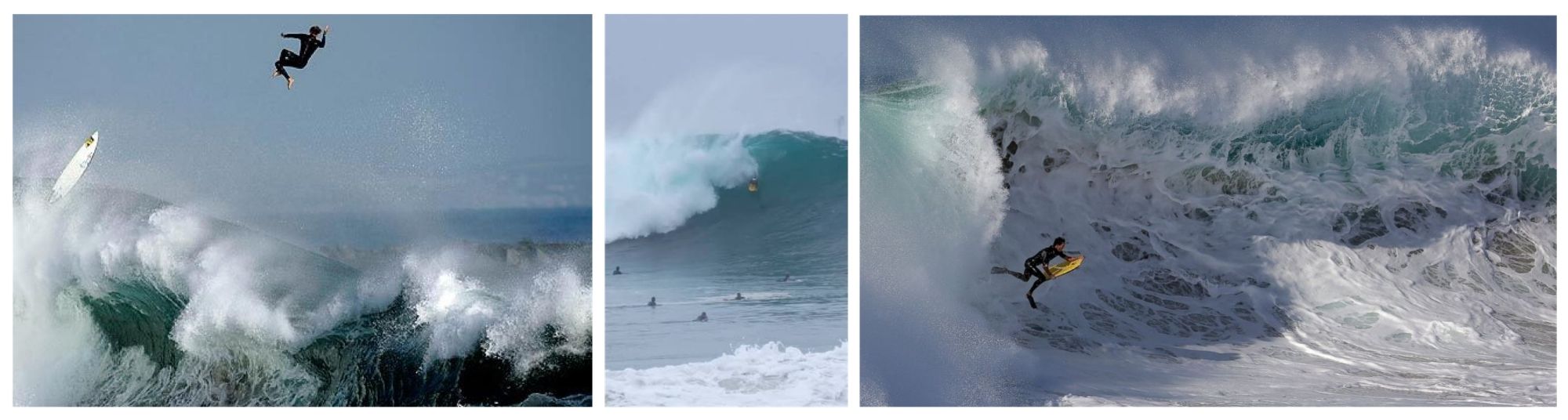
Even people who know very little about Newport usually know the Wedge — that famous stretch of water at the end of the peninsula where waves can become spectacularly enormous.
There is fishing.
There are boats everywhere.
A little farther down the coast, Crystal Cove has rocky coves and tide pools where kids can hunt for anemones, crabs and all the other tiny creatures that suddenly become enormously important when you're four years old.
And then there is Pirate's Cove.
I've actually never seen Jesus Revolution.
My dad keeps telling me about it because he remembers this history actually happening.
Pirate's Cove wasn't chosen for the movie merely because it looked pretty on camera. During Southern California's Jesus Movement in the late 1960s and early 1970s, large numbers of young people really were baptized in those waters.
Greg Laurie, whose story is depicted in Jesus Revolution, was a Newport Harbor High School student during that era — the same high school and era of some of our own relatives.
My dad remembers the movement.
He remembers the baptisms at Pirate's Cove.
And decades later, filmmakers returned to that same cove to recreate those baptism scenes for the movie.
I love this kind of history because Newport doesn't present it to you in a neat little heritage corridor.
There aren't stars embedded in the sidewalk leading ceremoniously toward Grauman's Chinese Theatre. Nobody rings a bell and announces:
YOU ARE NOW EXPERIENCING HISTORICAL NEWPORT.
.jpg)
You just stumble into it while living your day.
You take the kids for ice cream beneath a Ferris wheel and discover something has been entertaining families there since 1936.
You bike toward the pier and pass a bar that's been pouring drinks since 1908.
You wander farther and find fishermen selling their own catch in a tradition dating back to 1891.
You head toward a beautiful little cove and discover thousands of people were baptized there during a cultural and religious movement your own father remembers.
Turn the other direction and Junior Lifeguards are pounding down the beach in red swimsuits.
Nothing is arranged for you.
The history is simply underneath everything.
Layer upon layer of people who came to this same little strip of coast before you did.
That's the Newport I love.
And Then There Were the Shells
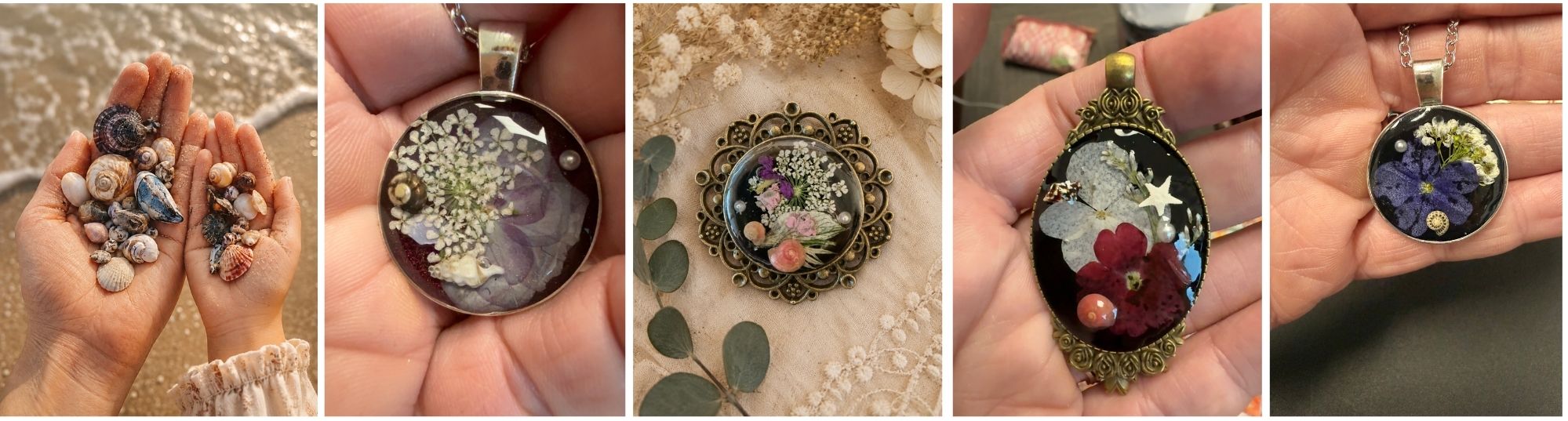
Everly and I spent so much time collecting shells.
I've been on beaches practically my entire life, and I don't know that I have ever seen so many shells scattered through the sand.
I swear, you could scoop up a completely random handful and find five tiny, whole, perfectly beautiful shells hiding in it.
So every walk became a treasure hunt.
Bend down. Inspect. Reject. Keep. Compare. Fill hands. Empty hands. Find another one that we absolutely cannot leave behind.
Those shells ultimately became part of the inspiration for the shell necklaces in EverWyld Reverie. (Which I am shamelessly making a plug for here)
And I love that.
Because it means the trip didn't entirely end when we packed up.
Some little fragment of those mornings came home with us.
So Why Newport Beach With Kids?
It's not because Newport has the safest ocean.
The ocean isn't safe.
That's part of the lesson.
It's not because everything is brand-new and perfectly polished.
Thank goodness it isn't.
It's not because there is one spectacular attraction you absolutely have to see.
There isn't.
It's because, especially on the Balboa Peninsula, everything fits together.
The beach. The harbor. The big waves. The ferry. The boats. The playgrounds. The bikes and scooters. The arcade. The restaurants. The old bars. The fish market. The Junior Lifeguards. The ridiculous Ferris wheel. The shells.
The places I remember from being nine.
And sixteen.
And newly in love with Jeff.
And now the places my kids will remember from being two, or four, or eleven.
For two weeks, our world got very small.
And I mean that in the best possible way.
We didn't spend our vacation driving around Southern California trying to entertain our children.
We woke up and walked outside.
The kids grabbed scooters.
Somebody needed food. Somebody needed the beach. Somebody desperately needed to climb something. Somebody needed to make sure the rest of us were not about to die.
And almost everything we needed was already there.
That, for me, is what makes Newport different.
You don't have to constantly go somewhere to have a beach vacation there.
You can park the car.
Put the keys away.
And for a couple of weeks, just live between the harbor and the Pacific.