
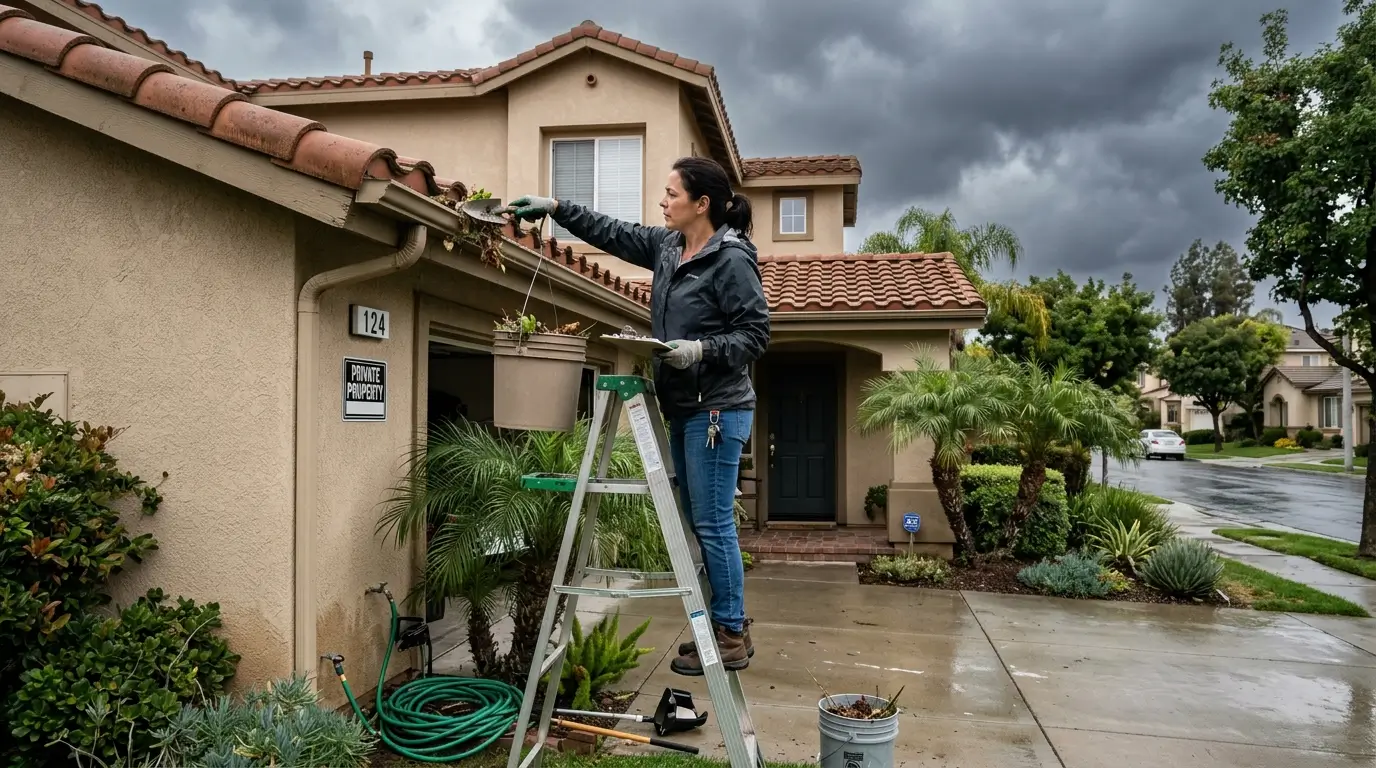
Southern California has a funny relationship with rain. We go months without it, everyone forgets it exists, and then one week the sky opens up and every slow drain, tired roof seal, and clogged gutter in the region decides to introduce itself at the same time.
We know this because we see it in our maintenance requests. After reviewing recent and past work orders across the properties we manage, the same handful of problems shows up every wet season. Most were small and fixable. Many had been quietly waiting through months of dry weather. A few had even been "fixed" before.
So before the next rain, here is the checklist we would want every Southern California rental owner to walk through. No ladder heroics required. Most items take a quick look, a phone call, or a vendor visit.
Key Takeaways
A leak that disappears in dry weather has usually just gone quiet, so recheck previous trouble spots.
Drainage problems in side yards, patios, and driveways can push water into garages and homes, even when the gutters look fine.
Windows, balconies, patio covers, and eaves fail gradually, and HOA coordination may be part of the fix.
Residents are your early warning system, but only if they know what to look for and report it fast.
Storm supplies and water-removal equipment can get scarce once a big storm hits the forecast, so stock up early.
Revisit the Roof, Especially Where It Leaked Before
Here is a pattern we see too often: a roof leaks, the ceiling dries out, everyone moves on, and the next storm brings the same stain back, a little bigger.
A leak that stops when the weather turns dry is not the same as a leak that has been fixed. The water simply stopped coming.
Before the season starts, ask a roofer to take a focused look at:
Any spot that has leaked in the past, including areas that were already repaired
Flashing around chimneys, skylights, walls, and roof valleys
Roof penetrations such as vents, plumbing stacks, and HVAC or solar mounts
Cracked, lifted, or missing shingles and tiles
The previous repairs matter most. Sealant ages fast under Southern California sun, and a patch that held up last winter may have cracked over a long, hot summer. Hand the roofer your records of past leak locations so nobody has to guess.
Follow the Water: Gutters, Downspouts, and Exterior Drains
Gutters get most of the attention, but some of the worst water intrusion we have seen started with a side-yard drain packed with leaves or a patio drain slowly filling with dirt.
When those drains back up, water has to go somewhere. Too often, "somewhere" is the garage or the living room.
A good pre-season drainage check covers:
Clearing gutters and confirming downspouts are attached and flowing
Making sure downspouts discharge away from the foundation, not against it
Cleaning side-yard, patio, and driveway drains, then running water through them to confirm they actually drain
Looking for low spots where water collects near doors, garages, or walls
The simplest test is to ask two questions: where does water collect on this property, and how does it leave? If you cannot answer the second one, that is your project.
Check Windows and Other Exterior Openings
Windows rarely fail all at once. They fail slowly, one dried-out seal at a time, until a wind-driven rain finds the gap.
Walk the exterior and the interior, and look for:
Cracked, shrinking, or missing caulk around window frames
Water staining or peeling paint below windowsills or at the corners of frames
Swollen or soft trim
Gaps around exterior doors, vents, and utility penetrations
Pay extra attention to any window that has been repaired before. Recurring leaks around the same frame usually mean the first fix only treated the symptom. Sometimes the real culprit is flashing behind the stucco or siding, which calls for a qualified contractor instead of a tube of sealant and good intentions.
Look Up and Out: Balconies, Patio Covers, and Eaves
People enjoy these spaces all summer and ignore them all winter, and the wood and waterproofing underneath hide damage well.
On your walkthrough, check for:
Cracked, bubbling, or worn balcony surfaces and failing waterproofing membranes
Soft, stained, or rotting wood on patio covers, fascia, and eaves
Peeling paint or dark streaks on the underside of balconies and overhangs
Pooling water on balcony decks that should be draining
If the property is in a condo or townhome community, figure out who owns what before something leaks. Balconies, exterior walls, and roofs are often HOA responsibilities, but the dividing line varies by community and governing documents. Reporting concerns to the HOA early and in writing gets you in the repair queue sooner.
Hunt Down Standing Water and Irrigation Leaks
Not every water problem falls from the sky. Broken sprinklers and overwatering can saturate soil against a foundation before the first storm even arrives.
Side yards are the usual hiding spot because nobody walks through them. Take a lap and look for:
Soggy soil, puddles, or algae that stick around after watering
Broken, tilted, or geysering sprinkler heads
Wet spots along walls or near the foundation
Irrigation spraying directly onto siding, stucco, or windows
Then adjust the irrigation controller for the wetter season. A system programmed for August heat has no business running the morning after a storm. A rain sensor helps, and so will your water bill.
Prepare for Wind: Trees, Gates, and Loose Outdoor Items
Storms here often bring wind along with the rain, and wind has a talent for turning ordinary yard items into projectiles.
Before the season, take care of:
Trees: Have an arborist evaluate branches overhanging the roof, power lines, driveways, or a neighbor's property. Dead or cracked limbs are the first to go.
Gates and fences: Repair loose hinges, broken latches, and leaning fence sections.
Outdoor furniture and décor: Patio umbrellas, lightweight chairs, trash bins, and planters should be secured or stored when strong winds are forecast.
That last item is usually the resident's job, so a quick reminder before a windy forecast goes a long way. A friendly heads-up costs nothing. A patio umbrella through a window costs considerably more.
Turn Residents Into Your Early Warning System
Your residents see the property every day, which makes them your best leak detectors, as long as they know what to look for.
Before the rainy season, remind residents to report:
New or growing stains on ceilings or walls
Bubbling, peeling, or blistering paint
Damp carpet, warped flooring, or musty odors
Drips around windows, doors, skylights, or light fixtures
Water pooling in the garage or near entry doors
Some situations need immediate attention, not a note for next week. Water near outlets, light fixtures, or the electrical panel, and any ceiling that is sagging or bulging, should be treated as urgent. Residents should keep clear of the area and contact us right away.
The earlier we hear about a problem, the smaller it tends to be. We covered why that matters in our breakdown of how a $500 leak can become a $10,000 problem. Residents can submit a maintenance request online anytime, and our tenant FAQs answer the most common resident questions. For anything urgent, our 24/7 emergency line is the right call, not a portal message.
Stock Up on Supplies Before the Forecast Turns Serious
The local handymen and contractors we work with have a warning: when a major storm hits the forecast, everyone in Southern California needs supplies at once. Sandbags disappear, tarps sell out, and rental pumps get spoken for.
The best time to prepare is when nobody else is thinking about it. That means now.
Consider keeping these on hand, especially for properties with known drainage issues, low-lying garages, or a history of leaks:
Sandbags and sand, or temporary flood barriers, for doorways, garage entries, and known low spots
Heavy-duty plastic sheeting and tarps for emergency roof or window coverage until a pro can make permanent repairs
Water-removal equipment, such as a utility pump with a long discharge hose and a wet/dry vacuum
If you own in Los Angeles County, LA County Public Works maintains a list of fire stations that traditionally offer free sand and sandbags, and many other cities and counties run similar programs. Call ahead, since stations run low when a storm is close.
One safety note: gas-powered pumps and generators belong outdoors only, well away from windows and doors.
Frequently Asked Questions
When should Southern California rental owners start preparing for the rainy season?
Early fall is ideal, before the first significant storm. Roofers, gutter cleaners, and arborists book up quickly once the rain starts.
Who is responsible for storm damage at a rental property?
In most cases, the owner is responsible for the structure and its systems, including the roof, drainage, and windows. Residents are typically responsible for reporting problems promptly and for their own belongings, which is why renters insurance matters. In condo or townhome communities, the HOA may be responsible for certain exterior components.
What counts as a rain-related emergency?
Active leaks, water entering the home or garage, water near electrical outlets or fixtures, and sagging or bulging ceilings all need immediate attention. Residents should contact their property manager's emergency line right away rather than submitting a routine request.
A Dry Day Is the Best Day to Get Ready for a Wet One
None of this is glamorous, but nearly every rain-related call we get traces back to something on this list: an old leak that came back, a drain nobody checked, a seal that dried out, or a small stain nobody mentioned.
The owners who come through storm season with the fewest surprises usually did the boring work while the sun was out. Boring? Yes. Cheaper than drywall replacement? Every single time.
Rather hand this checklist to someone who knows the roofers, drain techs, and arborists by first name? Our team coordinates inspections, vendor scheduling, and after-hours emergency response for the homes we manage, so you are not the one scrambling when the forecast changes. See how our maintenance coordination works and let us help you get ahead of the next rain.